- Technical Parameters
| Item No. | Parameter Name | Technical parameters |
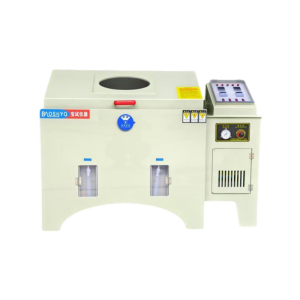
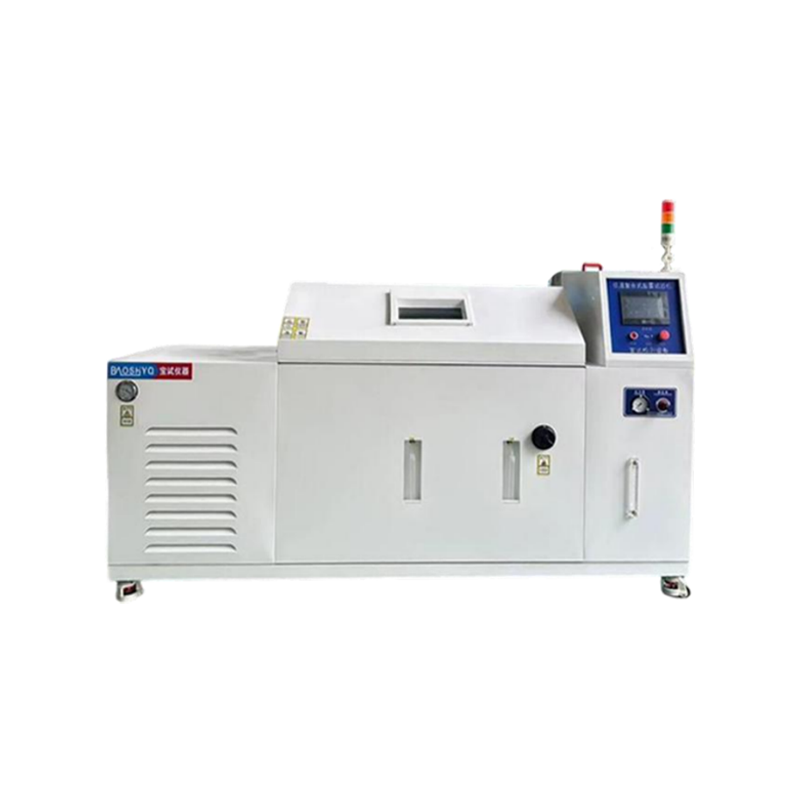
| 1.1 | Equipment Name | Compound-Type Salt Spray chamber |
| 1.2 | Equipment Introduction | Cyclic Corrosion Test is a more realistic salt spray test than traditional steady-state exposure. Because actual outdoor exposure usually involves both dry and wet environments, simulating these natural, periodic conditions makes laboratory accelerated tests meaningful. Studies have shown that after cyclic corrosion testing, the relative corrosion rate, structure, morphology of samples are highly similar to the results of outdoor corrosion. Therefore, compared with traditional salt spray spraying methods, cyclic corrosion testing is closer to real outdoor exposure. They can effectively evaluate many corrosion mechanisms, such as general corrosion, electrochemical corrosion, and crevice corrosion.
This equipment is designed to simulate and enhance the environmental impact on metal materials exposed to salt-contaminated and corrosion-accelerating outdoor atmospheres. It incorporates a test method that subjects test specimens to cyclic exposure to salt spray, dry, and damp-heat environments. The test performed by this equipment is a comparative test, and the test results cannot predict the long-term corrosion resistance of the same type of metal materials used under such environmental conditions. However, this method can still provide valuable information on the relevant properties of materials exposed to salt-contaminated environments similar to the test conditions. Compared with traditional accelerated corrosion tests, such as Neutral Salt Spray Test (NSS Test), Acetic Acid Salt Spray Test (ASS Test), and Copper Accelerated Acetic Acid Salt Spray Test (CASS Test), the greatest advantage of this equipment’s test lies in its ability to better reproduce the corrosion occurring in outdoor salt-contaminated environments. |
| 1.3 | Equipment Model | BS-120D |
| 1.4 | Effective Volume | 576L |
| 1.5 | Internal Chamber Dimensions | 1200×800×600(W*H*D)(mm) |
| 1.6 | External Dimensions | 2800×1500×1200(W*H*D)(mm) |
| 1.7 | Brine Tank Volume | 50L |
| 1.8 | Water Tank Volume | 40L(The water tank supports automatic water replenishment) |
| 1.9 | Lid opening method | Cylinder lifting |
| 1.10 | Test Temperature | +20℃~+60℃ |
| 1.11 | Relative Humidity | 20%-98%RH |
| 1.12 | Saturated Tank Temperature | +35℃~+70℃ |
| 1.13 | Temperature Uniformity | Temperature: ≤2%℃ |
| 1.14 | Temperature Fluctuation | Temperature: ≤±0.5℃ |
| 1.15 | Settling Volume | 1-2ml/80cm²/h
Continuously Adjustable |
| 1.16 | Test Modes | Programmable Salt Spray, Damp-Heat, Dry, Standard Climate |
| 1.17 | Defogging Mode | Automatic Defogging, with fog discharged by air extrusion |
| 1.18 | Common Test Status | Neutral Salt Spray Test
Test Chamber Temperature: 35℃ Saturated Tank Temperature: 47℃ Spray with 5% mass ratio NaCl solution Settling Volume: 1~2ml/(80cm²·h) Damp-Heat Storage Test Test Chamber Temperature: 25℃, Humidity: 95% RH Test Chamber Temperature: 40℃, Humidity: 93% RH Test Chamber Temperature: 50℃, Humidity: 70% RH Test Chamber Temperature: 50℃, Humidity: ≥95% RH Standard Atmosphere Storage Test Test Chamber Temperature: 23℃, Humidity: 50% RH Test Chamber Temperature: 25℃, Humidity: 45% RH Thermal Drying Test Test Chamber Temperature: 60℃, Humidity: <30% RH Condition Transition Requirements Transition from salt spray conditions to dry conditions: ≤60min Transition from dry conditions to damp-heat conditions: ≤30min Transition from damp-heat conditions to salt spray conditions: ≤30min |
| 1.19 | Weight | 150KG |
| 1.20 | Power | 380V 8KW |
| 1.21 | Others | 1. The above performance indicators are data measured under the conditions of no load, no test samples, and ambient temperature of 25±2℃.
2. 70dB (1 meter away from the chamber door, 1.5 meters high). |
- Compliant Test Standards
| Item No. | Standards | Explanation of Standards |
| 2.1 | General standards | GB/T2423.17 Environmental Testing – Test Ka: Salt Spray |
| GB/T2423.18 Environmental Testing – Test Kb: Salt Spray, Alternating (Sodium Chloride Solution) | ||
| IEC 6008-2-11 Environmental Testing – Test Ka: Salt Spray Test Method | ||
| IEC 6008-2-52 Environmental Testing – Test Kb: Salt Spray, Alternating (Sodium Chloride Solution) | ||
| GB10587 Technical Conditions for Salt Spray Test Chambers | ||
| ASTM B117-16 Salt Spray Test | ||
| GJB150.11A Laboratory Environmental Test Methods for Military Equipment – Part 11: Salt Spray Test | ||
| Q/SOR T1-172-2020 | ||
| 2.2 | Acceptance Execution Standards | Manufacturing Standards: GB/T10586-2006, GB/T10592-2008 |
| Verification Standards: GB/T5170.2-2017, GB/T5170.5-2016 | ||
| Technical Standards: Acceptance according to the signed technical index requirements |
- Equipment Structure
| Item No. | Description | Technical Specification Parameters |
| 3.1 | Inner and Outer Casing Material | The inner and outer casings of this equipment are both made of A-grade beige PP (with a thickness of 8~12mm) that is resistant to high temperature, high humidity and high corrosion. Welded together by advanced annular three-dimensional reinforcement technology, the structure is robust, elegant and generous, making it suitable for various test specifications such as salt spray and copper acetate tests. |
| 3.2 | Reagent Replenishment Port | Equipped with a large-capacity hidden integrated reagent replenishment tank, which is easy to clean and operate. |
| 3.3 | Test Chamber Top Cover | Made of high-toughness PP sheet with a thickness of 8~10mm, it is designed into a 120° ridge-type top cover via the physical bending method. This design enables fog and dew droplets remaining on the top cover to slide down along the cover wall into the sealing groove, preventing dripping onto the tested products. Equipped with a transparent observation window, it facilitates the observation of the test status inside the chamber. |
| 3.4 | Heating Mode | During the salt spray test phase, the bottom water tank steam heating method is adopted. It features a fast heating rate to reduce standby time, and automatically switches to the constant temperature mode when the set temperature is reached, ensuring accurate temperature control and low power consumption. The heating tube is made of titanium alloy, which is resistant to acid and alkali corrosion and has an ultra-long service life. |
| 3.5 | Spray Tower | The spray tower employs a conical diffuser to guide mist flow, regulate mist volume, and ensure uniform mist deposition. |
| 3.6 | Water-sealed compartment | Utilizes a water-sealed box cover to prevent salt spray leakage. |
| 3.7 | Saturated Air Tank | Located at the bottom of the control cabinet, constructed from SUS#304 stainless steel plate. It performs filtration, heating, and humidification functions, ensuring purified air reaches saturated temperature and humidity before being sprayed through the nozzle. The saturator features an automatic water replenishment function. |
| 3.8 | Measuring cylinder | Collects the spray volume for each test, with a maximum scale of 50ml per measurement. |
| 3.9 | Pressure Regulating Valve | Manually adjusts intake pressure and spray pressure. Intake pressure is controlled at 0.3 MPa; spray pressure is controlled between 0.07 and 0.17 MPa. (These pressures are factory-set and generally require no adjustment by the user.) |
| 3.10 | Pressure Gauge | The pressure indicated by the pointer of the pressure gauge is the air pressure delivered from the saturated air tank to the nozzle during spraying. |
| 3.11 | Water Replenishment System(optional) | 1. Water replenishment for test chamber and pressure tank: Manual Two water replenishment control systems are available: manual and automatic. It supports dual water replenishment methods—automatic water supply via connection to a tap water pipeline or manual water addition—offering convenient operation.
Note: If the tap water contains excessive impurities or is acidic/alkaline, a filter must be installed at the water inlet. 2. Chemical solution replenishment: Adopts a built-in hidden large water tank, manual water replenishment method |
| 3.12 | Mist Discharge Pipe | 50mm diameter PVC hard plastic pipe, which releases the pressure caused by spraying when the salt spray test chamber is working, and the excess water in the chamber also overflows through this pipe. |
| 3.13 | Storage Rack | Exquisitely designed with A-grade beige PP material into V-shaped strips, it is matched with O-shaped strips made of composite resin fiber rods with a diameter of 10mm, to ensure that the tested products can be adjusted freely at an angle of 15°–30°. The test sample rack adopts a flat indexing type, which allows arbitrary angle adjustment, enabling uniform fog deposition on all sides and consistent fog exposure. This design ensures accurate test results and a large capacity for placing test samples. Meanwhile, a bottom mesh storage platform is adopted, facilitating the reasonable placement of large-sized and special-shaped samples.
|
| 3.14 | Electrical Control Cabinet | The circuit control board and other components are fixed in positions convenient for inspection and maintenance, adopting a door-lock opening side cover door, which is not only beautiful but also convenient for maintenance. |
| 3.15 | Control Panel | Touch screen control: Water shortage indicator, over-temperature indicator, end indicator, spray indicator, defogging indicator, test chamber temperature controller, pressure tank temperature controller, pressure gauge, main power switch, operation switch, timing switch, spray switch, defogging switch. |
- Air Circulation System
| Item No. | Description | Technical Specification Parameters |
| 4.1 | Salt Spray Test Phase (No Air Circulation) | 1. Air Conditioning Method: Temperature regulation is achieved through the balance between the airflow from spraying during the test and the thermal radiation at the bottom of the test chamber, so as to ensure a uniform temperature field inside the chamber.
2. Heating Method: Dry air heating radiation. |
| 4.2 | Damp-Heat Test Phase | 1. Air Conditioning Method: Forced internal air circulation for balanced temperature and humidity regulation. Equipped with a 316L stainless steel corrosion-resistant multi-blade centrifugal fan and a low-noise 316L stainless steel long-shaft motor.
2. Air Circulation Device: The adjustable circulating air duct structure forms a reasonable air supply and circulation system, effectively ensuring uniform temperature inside the test chamber. 3. Heating Method: Special corrosion-resistant titanium alloy air heater. 4. Self-developed all-plastic air duct structure: The air duct volute and air deflector are custom-made via CNC machining from high-quality PP sheets, featuring excellent corrosion and aging resistance as well as a long and reliable service life. |
- Heating System
| Item No. | Description | Technical Specification Parameters |
| 5.1 | Heating Method | Adopts steam heating method, with fast heating speed and reduced standby time. When the temperature is reached, it automatically switches to constant temperature state, with precise temperature and low power consumption. Titanium alloy heating tube, acid and alkali corrosion resistant, with ultra-long service life. |
| 5.2 | Heating Tube | Adopts stainless steel finned nickel-chromium wire high-speed heater. |
| 5.3 | Heating System | Temperature control is realized by microcomputer calculation and PID automatic adjustment. The output power changes according to the comparison result between the actual temperature and the set temperature, so as to achieve high precision, high efficiency, and high stability. |
- Humidification System
| Item No. | Description | Technical Specification Parameters |
| 6.1 | Humidification Method | An external humidification system is adopted. No need to drain water during low-temperature operation, facilitating easy control of low humidity. |
| 6.2 | Humidification Heating Tube | Stainless steel heating tube with over-temperature protection. |
| 6.3 | Control Valve | Equipped with an original automatic humidification pipeline control valve, which automatically opens and closes the pipeline to prevent corrosion of the humidification system by salt spray during the salt spray test phase. |
- Refrigeration System
| Item No. | Description | Technical Specification Parameters |
| 7.1 | Refrigeration Compressor | Imported Tecumseh refrigeration compressor from France |
| 7.2 | Cooling Method | Air-cooled type |
| 7.3 | Refrigerant | Environmentally friendly refrigerant |
| 7.4 | Main Refrigeration Accessories | Castel solenoid valve from Italy; US “083” filter drier, etc. |